
Reviving Julia Child’s Beef Bourguignon: Historical Cost Analysis Meets Modern Tech
Ah, Julia Child’s Beef Bourguignon – what is the food cost? I really wanted to figure it out, not just for today, but back in 1964 as well! But what if we took a trip back in time with today’s tools in hand? That’s exactly what I did in this video, merging culinary history with modern Excel kitchen management software to reveal some wild changes in food costs spread over 60 years!
Julia Child’s introduction of French cuisine to the American public was nothing short of revolutionary. Her Beef Bourguignon, a luscious stew that’s slow-cooked to perfection, became a symbol of gourmet cooking accessible at home. Fast forward to today, this dish not only remains a staple on menus across the world but also serves as a fascinating subject for a cost analysis using modern tools like the food cost calculator.

What is the food cost in 1964?
Imagine purchasing beef chuck roast for $0.59 to $0.69 cents per pound – unthinkable in today’s market! By plugging these historical prices into a sophisticated recipe costing template, I embarked on a journey to discover just how the economics of cooking Julia Child’s Beef Bourguignon have evolved. Originally, calculating the cost per serving at historical prices brought it down to a shockingly low figure. However, this playful exercise quickly turned into a stark illustration of inflation and changing market dynamics.
Transitioning from historical prices to present values, I utilized our reliable food cost calculator, a cornerstone of the free food cost software available at FoodCostChef.com. This tool isn’t just about crunching numbers; it’s about providing actionable insights. By updating the cost of beef to today’s prices directly in the Master Ingredient List, the updated cost per serving offers a more realistic glimpse of current economic conditions – a critical factor for anyone in the culinary industry.
The magic of this kitchen management software doesn’t stop at simple calculations. The alert system set up to monitor price changes due to seasonal fluctuations or market shifts is invaluable. For a professional kitchen, keeping ingredient costs updated is crucial, particularly when primary ingredients like meat can dramatically affect your bottom line.
Kitchen management using Microsoft Excel
Using the FoodCostChef Calculator, you can see how simple it is to keep your kitchen’s economics in check. Conditional formatting—a feature available in Excel – alerts you when prices are outdated, ensuring you’re always working with the most current data. This practical tip not only enhances the accuracy of your costings but also empowers you to manage your kitchen more effectively.
For chefs, kitchen managers and restaurateurs, your food cost software is not just about maintaining profitability—it’s about giving yourself full creative freedom while knowing your fiscal responsibilities are taken care of.
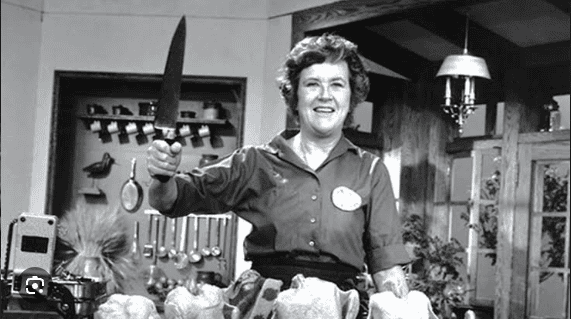
The Birth of “The French Chef”
Julia Child is synonymous with bringing French cuisine to the American dining table, but her journey into television was as serendipitous as it was revolutionary. It all began with her seminal cookbook, “Mastering the Art of French Cooking,” which was first published in 1961. The book’s success led to an appearance on a public television show in Boston, where Julia prepared an omelette. This segment was so well-received that it paved the way for her own show.
In February 1964, “The French Chef” debuted on WGBH, a public television station in Boston. The show was innovative, not just for its focus on technique and accessibility but also for its format. Julia Child was charismatic and unapologetically enthusiastic about cooking, which resonated deeply with viewers. Her ability to demystify complex French cooking techniques made the show an instant hit.
A Memorable First Episode
The very first episode of “The French Chef” featured Julia Child preparing Boeuf Bourguignon, a dish that would become one of her trademarks. What made this episode particularly memorable was not just the choice of recipe—a quintessential French dish—but Julia’s approach. She was meticulous yet approachable, explaining each step with clarity and injecting humor and encouragement. It was here that viewers first heard her reassuring motto: “You can do it, and here’s how.”
One interesting fact about this episode is that it was done in a single live take, a format that was typical of early television but challenging for cooking shows. There were no edits or retakes; Julia cooked in real-time, mistakes and all. This authenticity, combined with her charming demeanor, made viewers feel as though Julia was cooking right beside them in their own kitchens. This genuine and educational approach is what set “The French Chef” apart and helped to cement Julia Child’s legacy in culinary television.
This blend of historical significance and engaging television made Julia Child not just a chef but a cultural icon, changing the way Americans thought about food and cooking at home.


